The new pitch made its matchday debut on 5 August 2026 when Premier League champions Arsenal faced Real Betis in a pre-season friendly.
More than a new playing surface, the project is a significant investment in the flexibility, resilience and performance of Aviva Stadium — an always-on venue that hosts international football, international rugby and major concerts within a demanding annual calendar.
1.2m visitors welcomed to Aviva Stadium across 39 events in the 12 months to June 2026 including football, rugby, college football and concerts.
Under the previous SIS Fibre system, removing a concert stage and protective flooring typically required a minimum six-week recovery period before a new playing surface could be grown in and made match-ready.
The Hero Hybrid system offered a transformational reduction in recovery time, bringing this process down to two weeks.
For Aviva Stadium, this means greater flexibility in managing a busy multi-sport and multi-event calendar, with less disruption between major events and fixtures.
The Aviva Stadium team undertook a detailed review of the system, including visits to venues where Hero Hybrid pitches were already operating across demanding dual-sport schedules.
The team also worked closely with Croke Park Turf Farm in the Naul, County Dublin to consider turf production, nursery preparation and the logistics of harvesting and installing the new surface.
Pitch technology allows for the artificial fibres to be separated from the soil at end of life and is 100% recyclable!
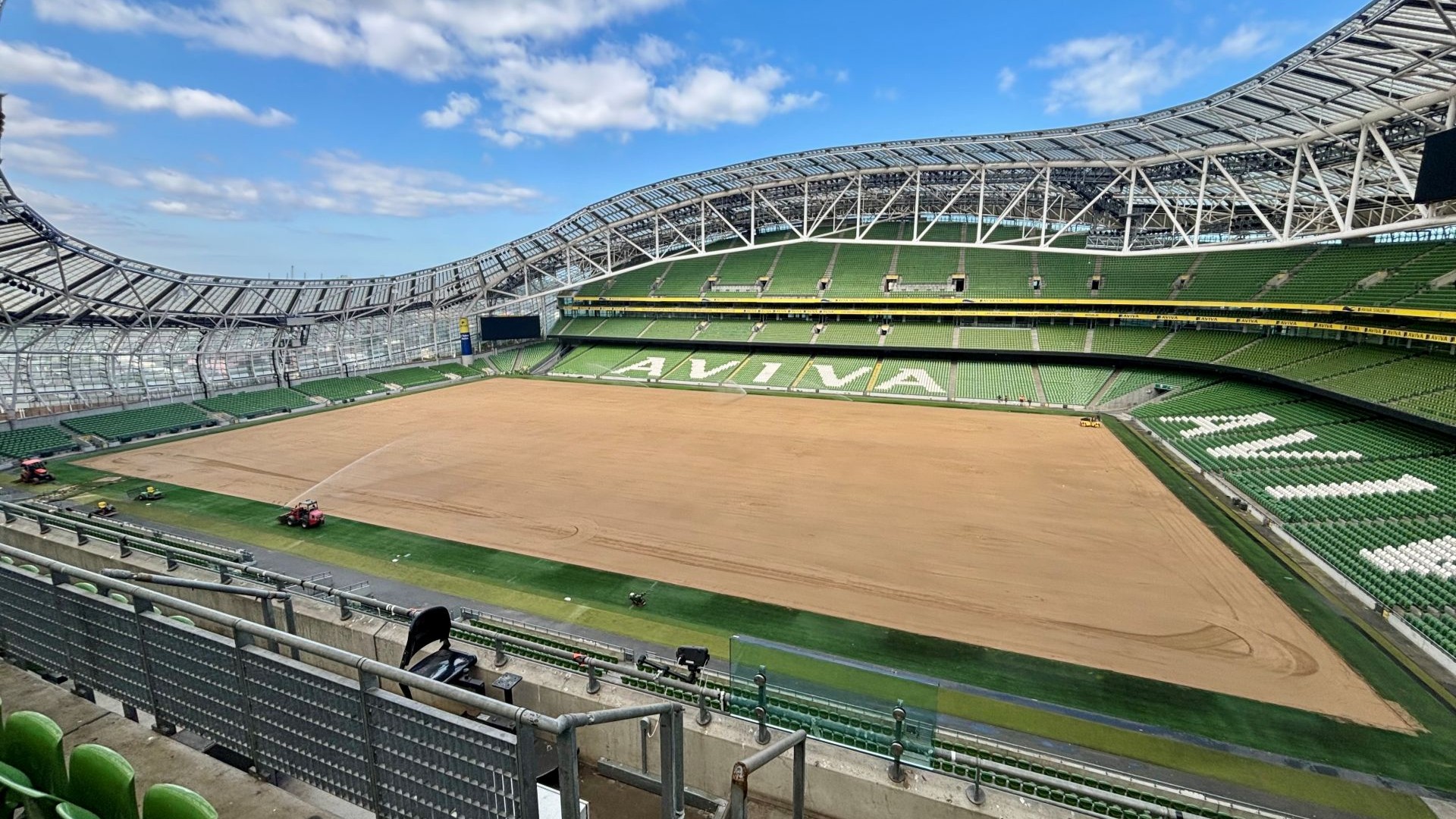
70mm removed
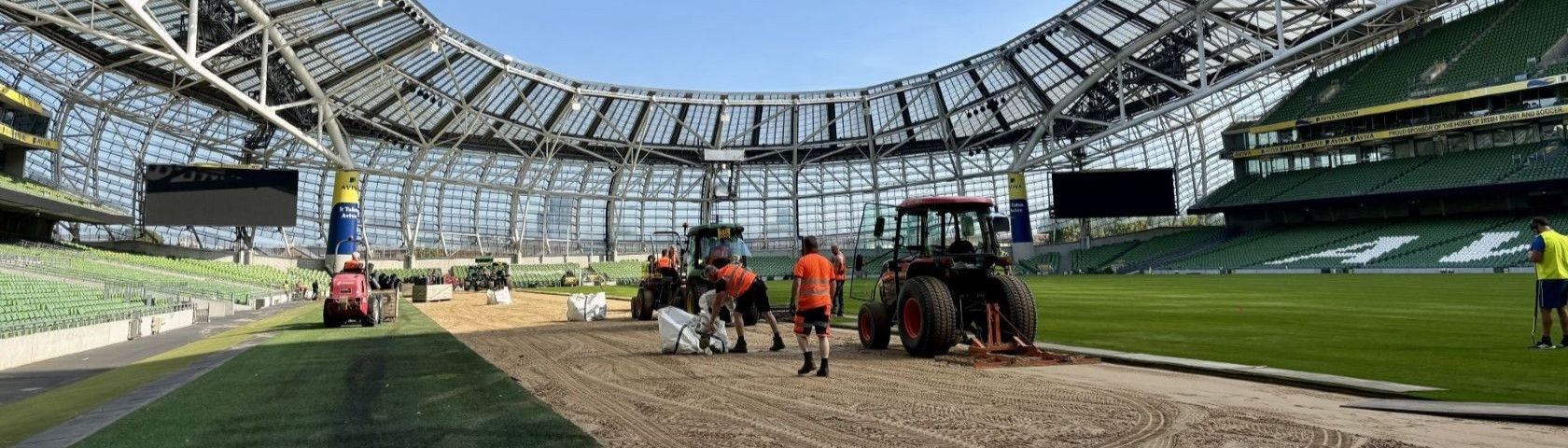
The existing playing surface was removed using a Koro machine.
50mm sand layer
A new sand layer created a level laying bed.
Compacted foundation
A Bomag roller prepared the surface for the new turf.
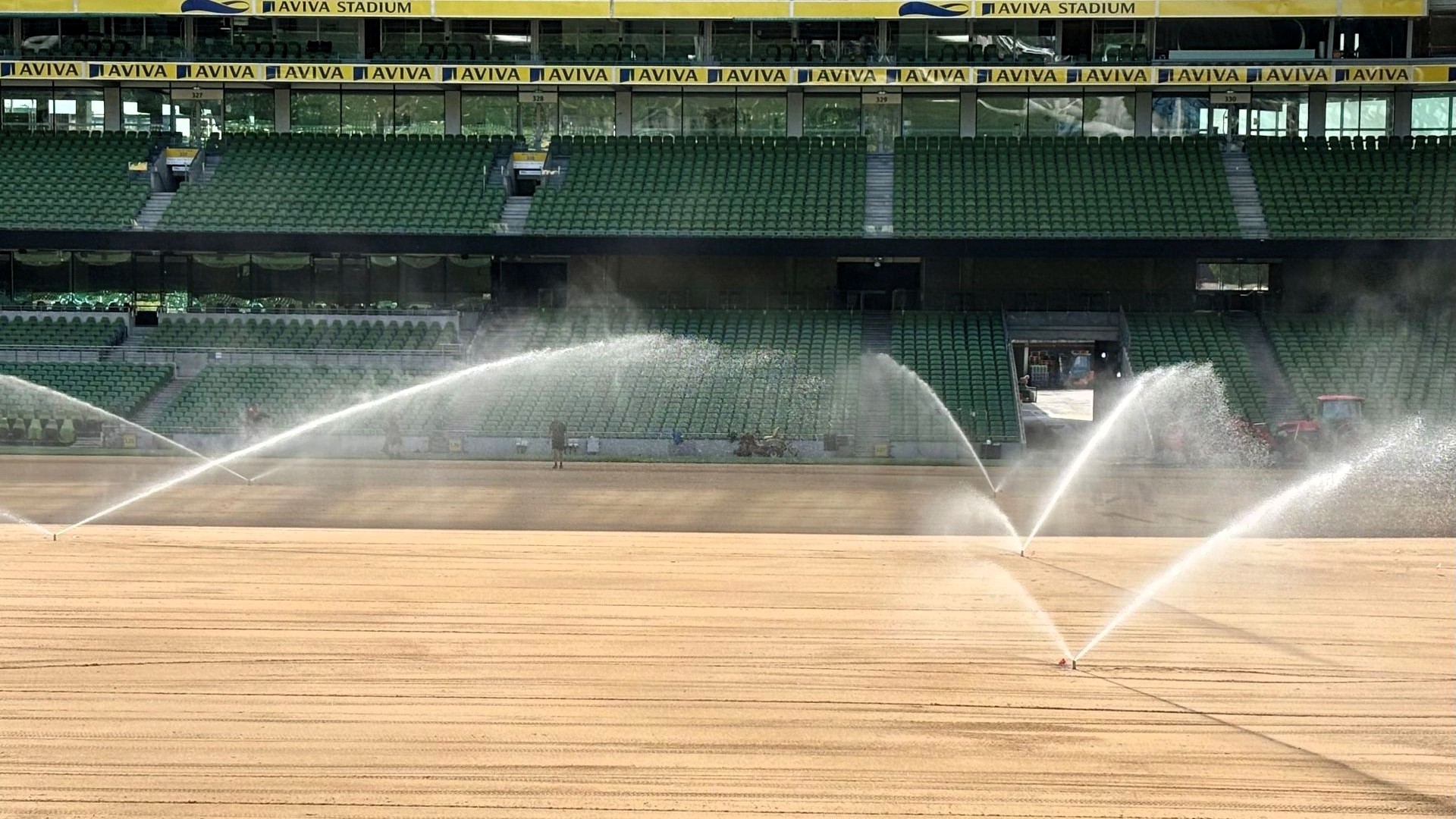 Irrigation system in action
Water used in pitch maintenance is harvested from the stadium roof through gutters and downpipes and stored in tanks in the stadium basement before being pumped into the irrigation system. This rainwater harvesting reduces the stadium's relianace on mains for pitch irrigation.
In the meantime, the new surface had been growing at Croke Park Turf Farm in the Naul.
A specialist turf harvester cut the turf to a thickness of 50mm, producing rolls measuring 1.2m wide by 11m long.
Each roll was numbered and labelled so it could be installed in the same sequence in which it had been harvested. This careful sequencing helps neighbouring rolls knit together naturally and contributes to the consistency of the finished surface.
At 04:30 on 21 July 2026, harvesting began.
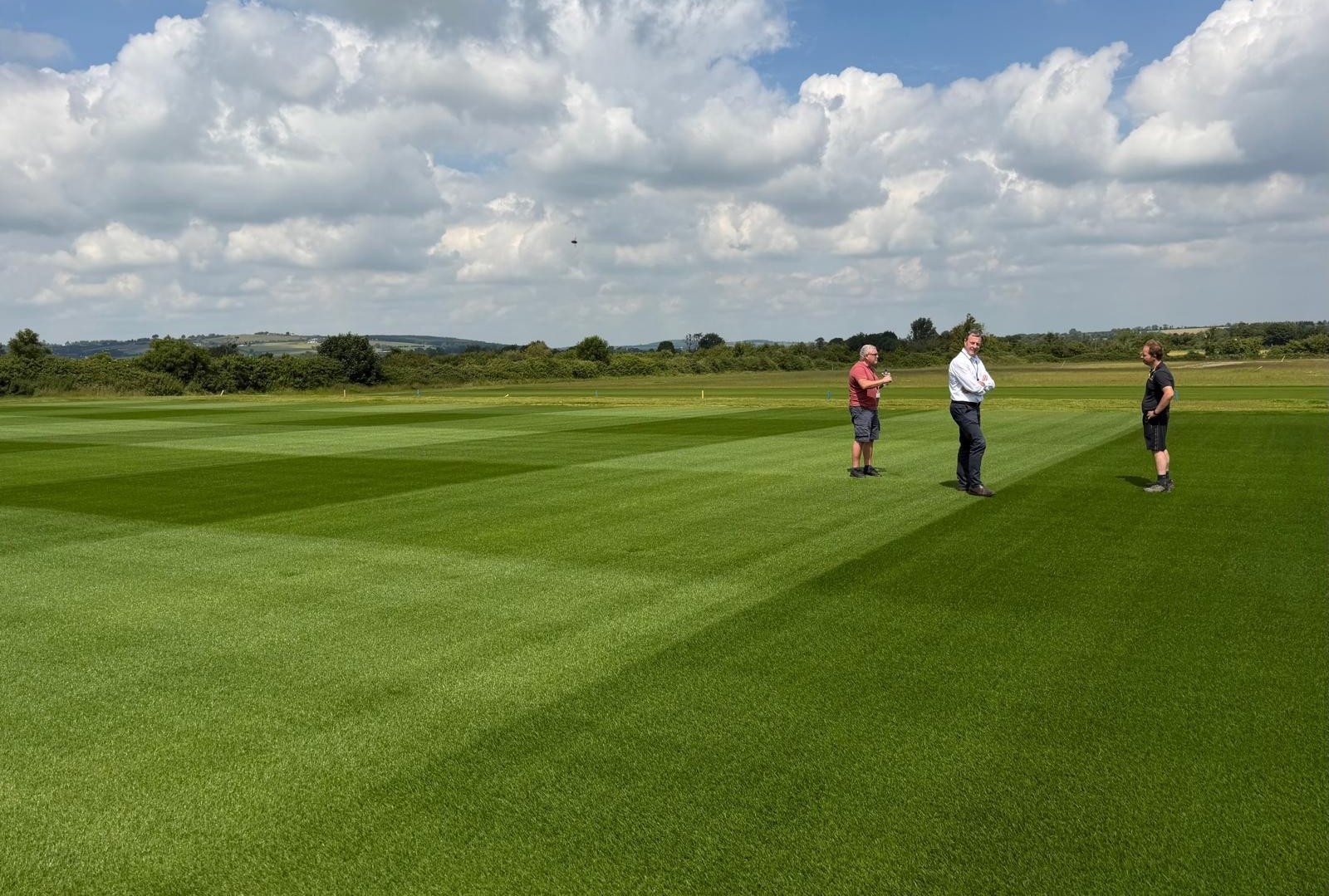 Croke Park Turf Farm visit
Once harvested, the turf was transported to Aviva Stadium and transferred onto a specialist laying machine.
Before each roll was laid, a tractor-mounted rake passed ahead of the laying machine, removing small bumps and depressions in the sand profile.
The laying machine then moved slowly across the pitch, unrolling each section into position. A second tractor, fitted with a side arm, followed behind, pushing each roll tightly against the pitch perimeter boards or the previously laid roll.
To create a seamless finish, a spiking machine was used to pinch and pull adjacent roll edges together, helping the joins bind tightly and become virtually invisible as the turf established.
The final roll was laid at 16:50 on 24 July — less than four days after harvesting began.
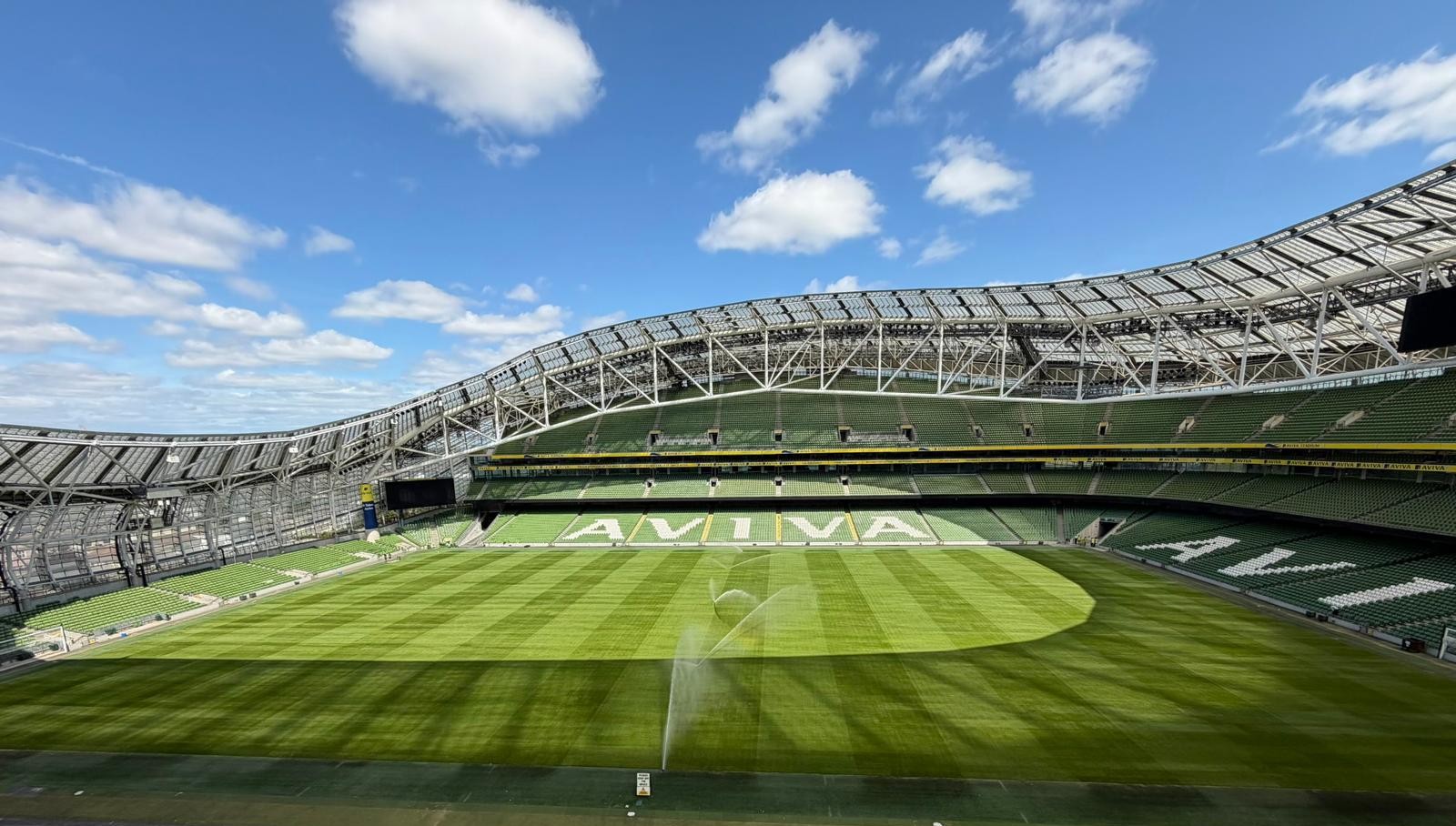
With the full pitch installed, the focus turned to refining the playing surface.
A Bomag roller completed an initial pass to remove small mounds created during installation and establish a consistent level.
Two pedestrian ProCore aerators then punched 8mm-diameter holes through the turf and into the sand layer below. This helped reduce compaction, improve air movement and drainage, and encourage stronger rooting.
The Bomag then completed a second levelling pass, further refining the surface.
The final stage was to brush the freshly laid turf, standing the grass upright and preparing it for its first cut.
That first cut was completed on 25 July using rotary mowers.
The speed of the project demonstrates one of the key advantages of the ‘Lay and Play’ approach.
March 2026
Hero Hybrid turf established at the Naul
April 2026
Surface sanded and seeded
21 July 2026
Turf harvested
24 July 2026
Final roll laid at Aviva Stadium
25 July 2026
First cut completed
5 August 2026
Arsenal v Real Betis – first fixture on the new pitch
The harvesting and installation process was completed in less than four days and just over 2 weeks after harvesting began, the new surface hosted its first fixture at Aviva Stadium.
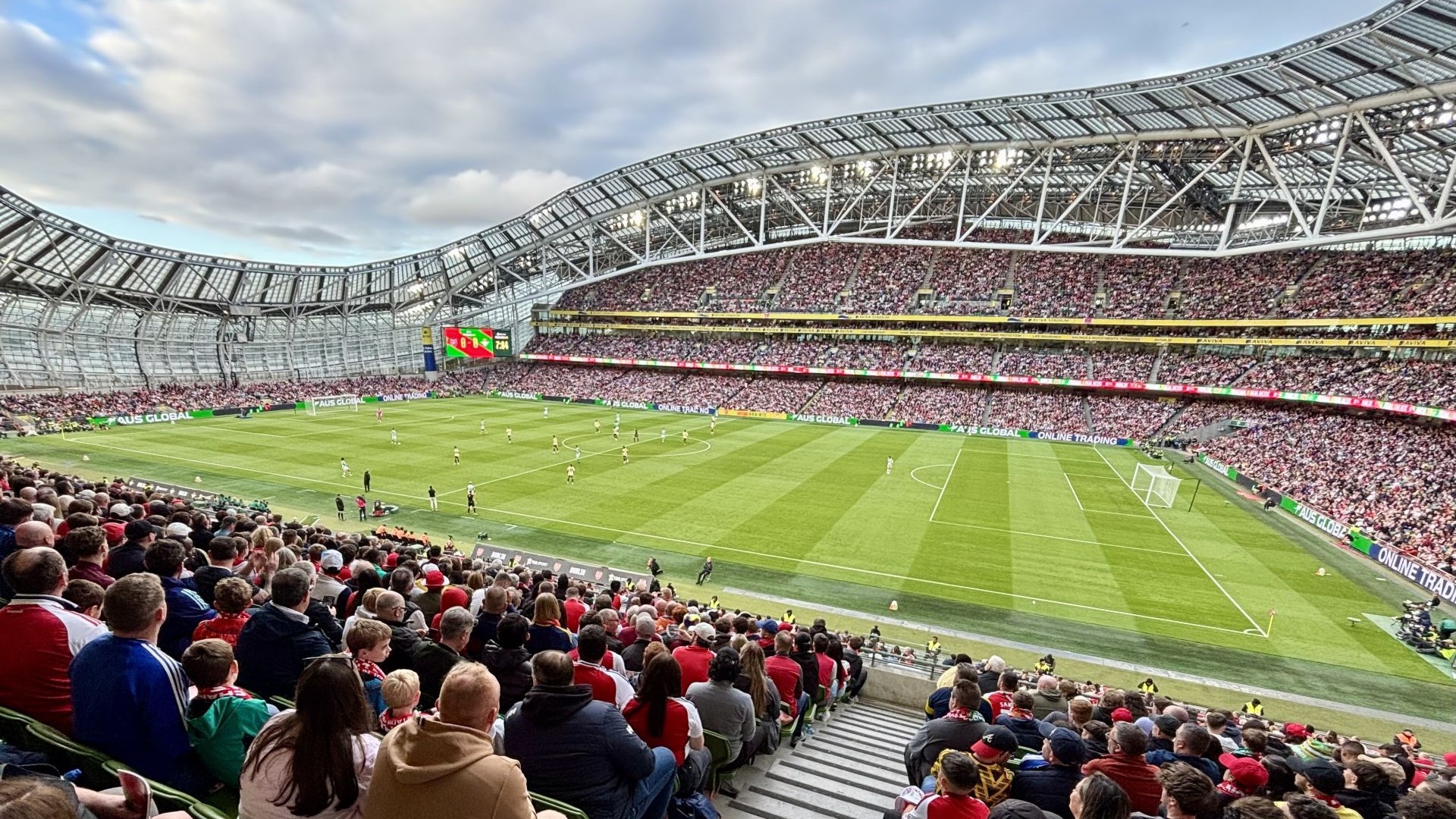
The new Hero Hybrid pitch has been designed around the demands of a modern, always-on stadium — one where elite sport, concerts and major events need to coexist with minimal downtime between them.
For Aviva Stadium, that flexibility is increasingly important as the venue’s calendar becomes more diverse and demanding.
For the grounds team, stadium operations staff and everyone involved in the project, it was the culmination of more than three years of planning, technical expertise and meticulous execution.
With the pitch now match-ready, Aviva Stadium is ready to welcome American College Football later this August, before a busy autumn season of football and rugby gets underway.
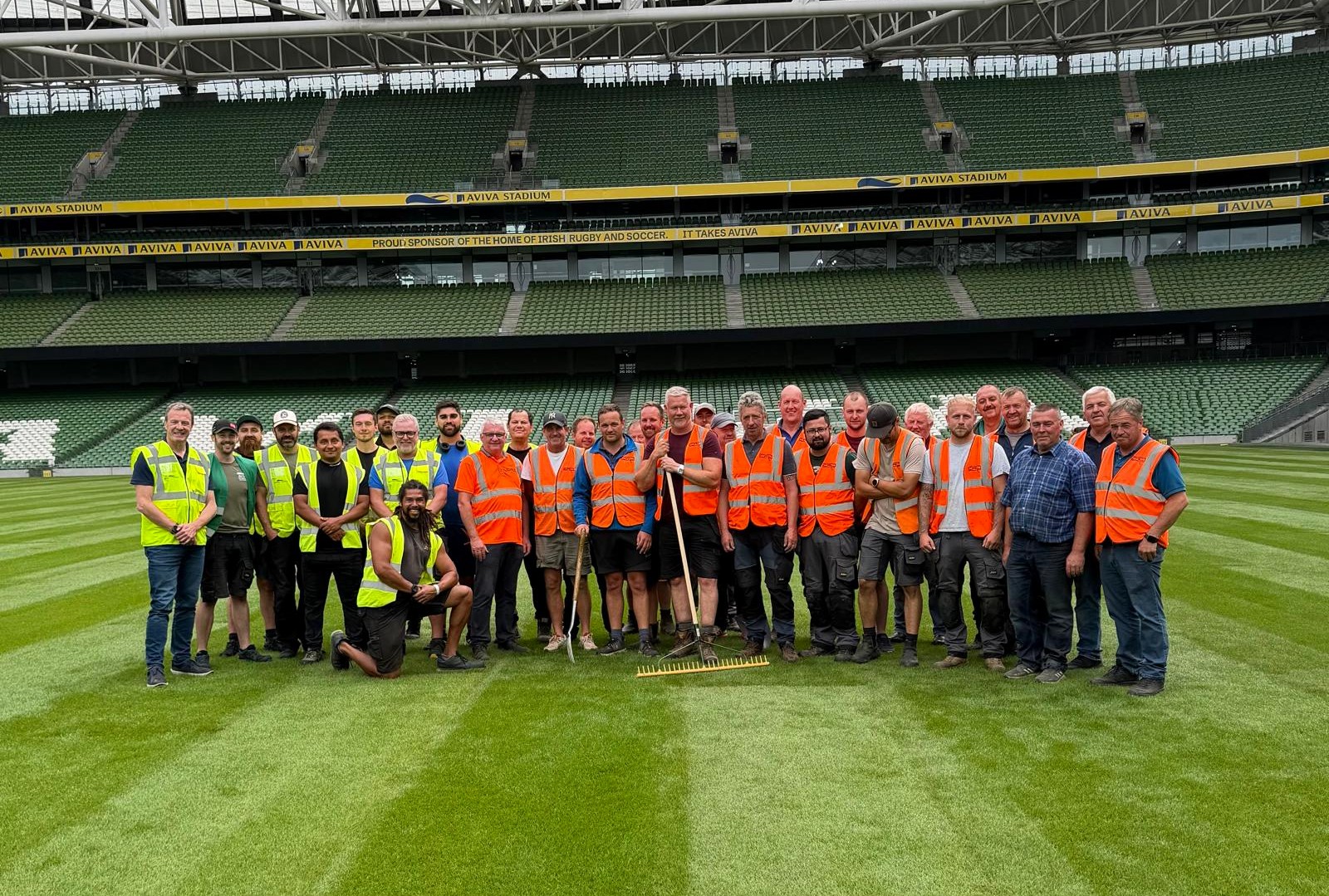
Project delivered by the Aviva Stadium grounds team with support from Clive Richardson Limited pitch contractors; Croke Park Turf Farm & County Turf; ALS pitch maintenance; and Labosport consultant agronomists.