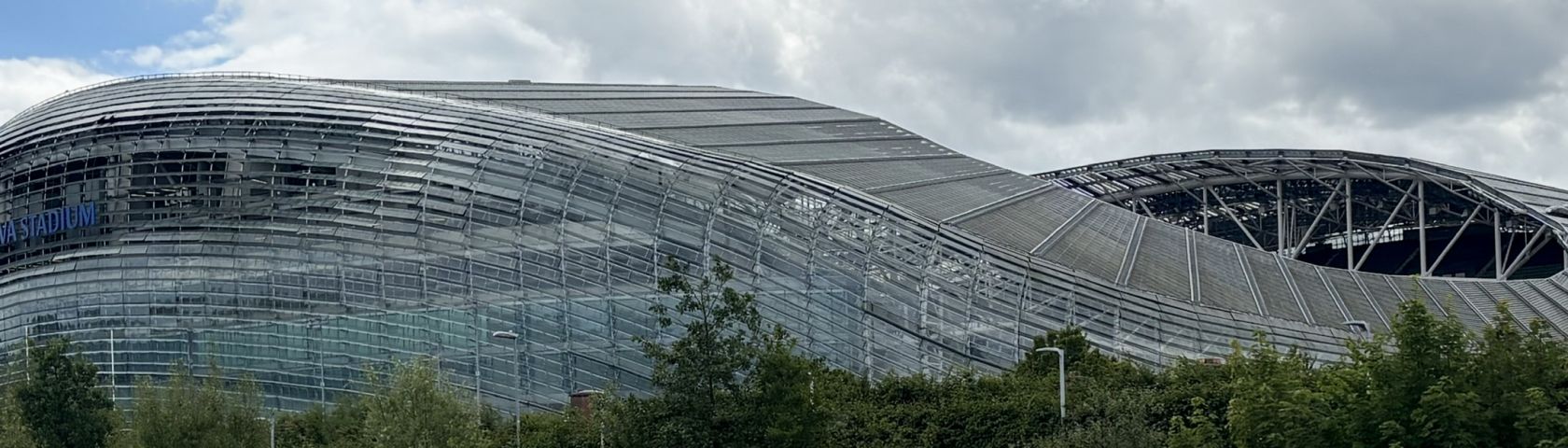
An independent report has confirmed the Aviva Stadium as one of Ireland’s most significant economic and social assets, delivering record annual impact across sport, entertainment, tourism and the wider economy. The study by Indecon International Economic & Strategic Consultants found that since opening in 2010 the stadium has welcomed more than 10 million attendees across over 300 major events, generating €4.5 billion in economy-wide expenditure and supporting approximately 10,000 jobs annually across Ireland.
The stadium is also widely recognised as a national asset. According to the research, 89 per cent of the Irish public believe the venue is important for national pride, tourism and cultural visibility. A separate analysis estimates that the stadium contributes €84 million each year in wider social benefit, reflecting its broader value to society beyond the events it hosts.
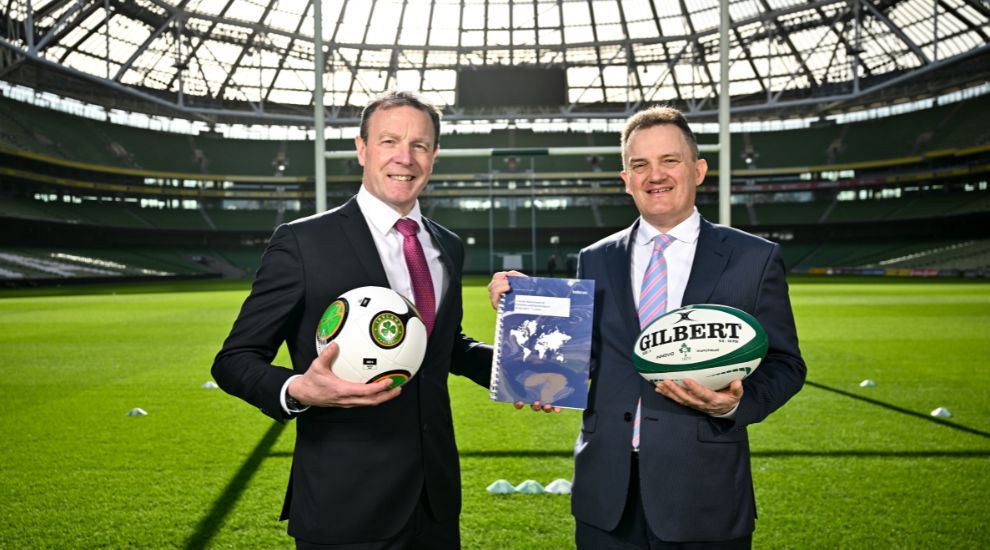
Pictured Stadium Director at Aviva Stadium Alan Gallagher, left, and Indecon Senior Partner William Batt during announcement of the Economic Impact Report for Aviva Stadium at the Aviva Stadium in Dublin. Photo by Sam Barnes/Sportsfile
2024 was a landmark year of economic impact, with the report highlighting it as the most impactful year ever recorded. Across the year, 33 major events attracted 1.2 million attendees and generated €832 million in total economy‑wide expenditure. These events also contributed €130 million in tax revenues and supported almost 10,000 full‑time equivalent jobs, underscoring the significant value delivered throughout the year. Events spanned international football & rugby, concerts, business events and the College Football Classic — reflecting the stadium’s unique ability to host diverse, high‑value experiences for both domestic and overseas audiences.
The report highlights the stadium’s role as a major gateway for international tourism, with 129,900 out‑of‑state attendees in 2024 whose spending generated €417 million in net additional economic impact—value that would not have entered the Irish economy otherwise. In some years, international visitors account for over 50% of the stadium’s total economic impact, reflecting the breadth of overseas interest in its events. This international audience includes supporters travelling for football and rugby internationals, concertgoers from abroad, and the growing number of fans visiting Ireland for the annual US college football fixtures
The Aviva Stadium continues to deliver significant value across multiple sectors:
Rugby: Major internationals, club fixtures and European finals continue to draw substantial crowds and overseas visitors.
Football: International fixtures, domestic cup finals and European club competitions contribute strongly to attendance and economic activity.
Concerts: 2024 included five major sold‑out gigs, generating over €100m in economic impact.
College football: Annual US fixtures deliver large numbers of long‑stay visitors — generating more than €300m in 2024
Business & hospitality: Local hospitality businesses reported that up to 9% of their annual revenue is directly or indirectly driven by stadium events.
Indecon forecasts that the Aviva Stadium will continue to deliver major national benefit, generating an average economic impact of €815 million per year between 2025 and 2029, supported by €614 million in annual gross value added and €126 million per year in exchequer returns. The impact will peak in 2028, when hosting seven UEFA EURO 2028 matches is expected to contribute €942 million to the Irish economy.Across t he period, out‑of‑state visitors are projected to deliver €410 million annually on average, underlining the stadium’s vital role in attracting international tourism and driving additional economic value.
Alan Gallagher, Aviva Stadium CEO says: “This report shows that the Aviva Stadium is far more than a venue — it is a national engine for jobs, tourism, economic growth, and cultural life. The breadth of activity we host, from football and rugby to concerts and college football, brings millions of people together each year and delivers substantial economic and social value for Ireland.”